Reconstructing Human Contributions to Accidents: The New View on Error and Performance

Sidney W.A. Dekker, Journal of Safety Research, 2002 🔗 DOI: 10.1016/S0022-4375(02)00032-4
The research question: How can investigators reconstruct the human contribution to accidents in a way that actually explains what happened — rather than simply identifying who to blame?
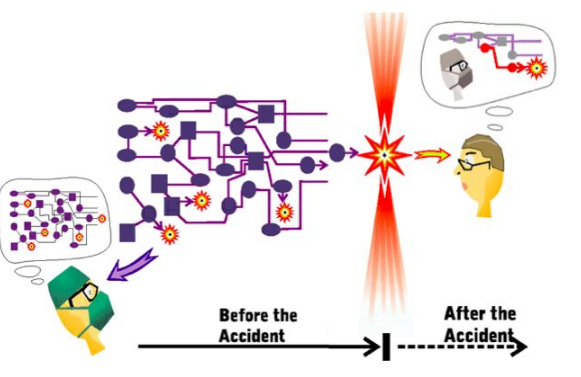
What they found: Dekker argues that most accident investigations are systematically distorted by hindsight bias. Looking back from a known outcome, investigators tend to linearise complex events, identify counterfactuals — things people could have done differently — and judge people against standards that were only obvious after the fact. None of this explains why people did what they did. The alternative Dekker proposes is reconstructing the "local rationality" of the people involved — understanding why their actions made sense to them at the time, given what they knew, what they could see, and the pressures they were under. He outlines a five-step method for doing this systematically, moving from a context-specific account of events toward a conceptual understanding of human performance.
Why it matters clinically: Every debrief, incident report, and mortality and morbidity conference in medicine is vulnerable to exactly the mechanisms Dekker describes. When a clinical team reviews a case that went wrong, the temptation is powerful — and almost automatic — to identify the moment someone made the wrong decision and work backwards from there. Dekker shows why this approach not only fails to explain what happened, but actively prevents learning. If we want our debriefs to improve safety rather than assign blame, we need to start asking a different question: not "where did they go wrong?" but "why did this make sense to them at the time?"
My take: This paper fundamentally changed how I run debriefs. The concept of local rationality — that people do what makes sense to them given their knowledge, their situation, and their constraints — is both intellectually rigorous and practically liberating. It removes the instinct to find a culprit and replaces it with genuine curiosity about the system and the circumstances that produced the outcome. I find myself returning to this paper regularly, particularly when I am involved in reviewing cases where the temptation to judge is strongest. The five-step reconstruction method is demanding in practice, but even a partial application changes the quality of the conversation in a debrief room.
One idea from this paper that I carry with me every day: the people involved were not doing something bizarre or reckless. They were doing exactly what they would normally do — the things that usually lead to success. Accidents are not the product of unusual people behaving in unusual ways. That shift in perspective is, I think, one of the most important things a clinician or team leader can internalise.
Limitations to know: This is a theoretical and methodological paper, not an empirical study — it does not present new data but rather a framework for analysis. The examples are drawn primarily from aviation, which, while highly relevant to medicine, is not a direct translation. The five-step reconstruction method is also resource-intensive and may be difficult to apply fully in busy clinical environments without dedicated time and training.
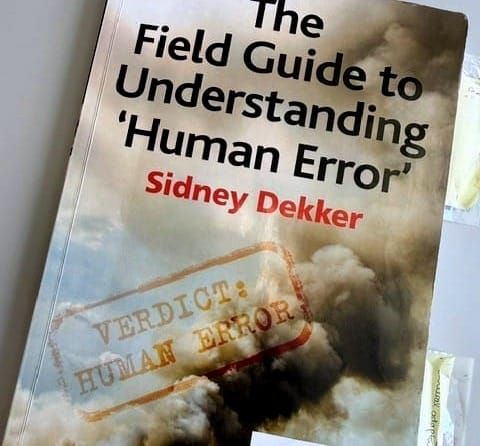
Accessible to non-academics? Partially — the writing is clear and Dekker is a gifted communicator, but some concepts require familiarity with human factors thinking. If you are a clinician with no background in the field, you will benefit from reading it slowly and may want to pair it with his book , The Field Guide to Understanding Human Error , for fuller context.