Why I Started This
I am not here because I have it all figured out.
I am here because I have questions that won't leave me alone — and because I have learned that the best way to think clearly is to write, share, and invite others into the conversation.
That is what Mind The Team is. An invitation.
The question that started everything
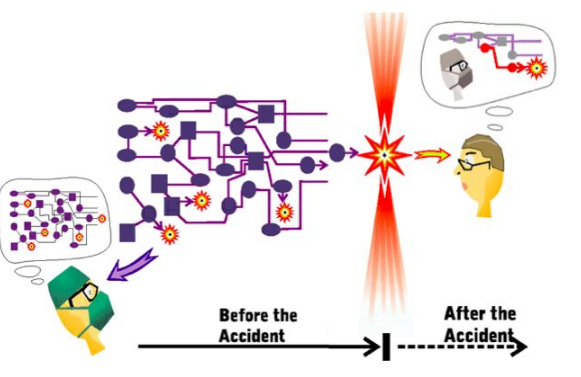
Somewhere between a night shift in the hospital and a lecture on human factors and system safety, I started noticing a pattern.
The cases that stayed with me — the ones that kept me awake, that I replayed in my head on the drive home — were almost never about clinical complexity. They were about something else entirely. A team that didn't speak up. A leader who didn't listen. A heavy feeling of responsibility. A situation where everyone in the room knew something was wrong, and no one said it out loud.
I am an anaesthesiologist and prehospital physician. I work in environments where the margin for error is narrow, and the stakes are as real as they get. And the more experience I gathered, the more convinced I became:
The limiting factor in high-stakes performance is rarely technical. It is human.
That question — why do some teams perform brilliantly under pressure while others fall apart? — led me to a Master's programme in Human Factors and System Safety. It led me to the research on psychological safety, debriefing, leadership, and organisational resilience. And that led me here.
Starting with why
Simon Sinek wrote that most people and organisations communicate from the outside in — they start with what they do, then how, and rarely get to why. The ones that inspire, he argues, start from the inside out. They start with why.
So here is my why.
I believe that understanding teams — how they communicate, coordinate, lead and follow, and learn from failure — is one of the most important and underexplored areas in medicine and beyond. I believe that the gap between what research tells us about human performance and what actually happens in clinical practice is vast, costly, and closeable. And I believe that sharing ideas, asking honest questions, and building a community around these topics is worth doing — even slowly, even imperfectly.
Why now — and why like this
I work more than full-time as a doctor. I am simultaneously completing a master's programme. By any rational measure, starting a blog is not the obvious next move.
But here is what I have discovered: this is not draining. It is energising.
Writing clarifies thinking. Sharing invites dialogue. Building something — even something small — creates momentum. And connecting with people who care about the same questions makes the work feel less like work and more like what it actually is:
Exploring. Creating. Building. Sharing.
That is what Mind The Team is for. Not a finished product, but a working document. Not a platform with all the answers, but a space to think out loud — with honesty, with curiosity, and with the belief that the conversation itself has value.
What you will find here
I will write about team dynamics and high performance. About leadership in clinical and complex environments. About psychological debriefing and what it actually takes to learn from experience. About the research and literature that shapes how I think — translated into plain language. And about the honest, sometimes uncomfortable reality of growing as a professional in medicine.
Occasionally, I will be joined by close colleagues — doctors, paramedics, leaders, and fellow explorers of these questions — who will challenge my thinking, add their perspective, and make this richer than it could ever be alone.
If any of this resonates with you — whether you are a clinician, a leader, a student, or simply someone who has ever been part of a team that didn't quite work — I am glad you found this.
Follow along. Reach out. Push back. Ask questions.
That is exactly the kind of conversation I am here for.
Anne Cathrine Anaesthesiologist · Prehospital Physician · Educationalist · MSc Human Factors and System Safety (candidate)
Start With Why — Simon Sinek Portfolio/Penguin, 2009
Sinek's central argument is deceptively simple: the most inspiring leaders and organisations don't start by explaining what they do or how they do it — they start with why. The what and how follow naturally from there.
It is not a book about medicine or teams specifically. But it is one of the clearest frameworks I have encountered for understanding why some people and organisations create genuine followership while others — with equal competence and resources — simply don't.
Short, readable, and genuinely thought-provoking. A good first book for this kind of exploration.
Find more reading recommendations on the Worth Reading page.